
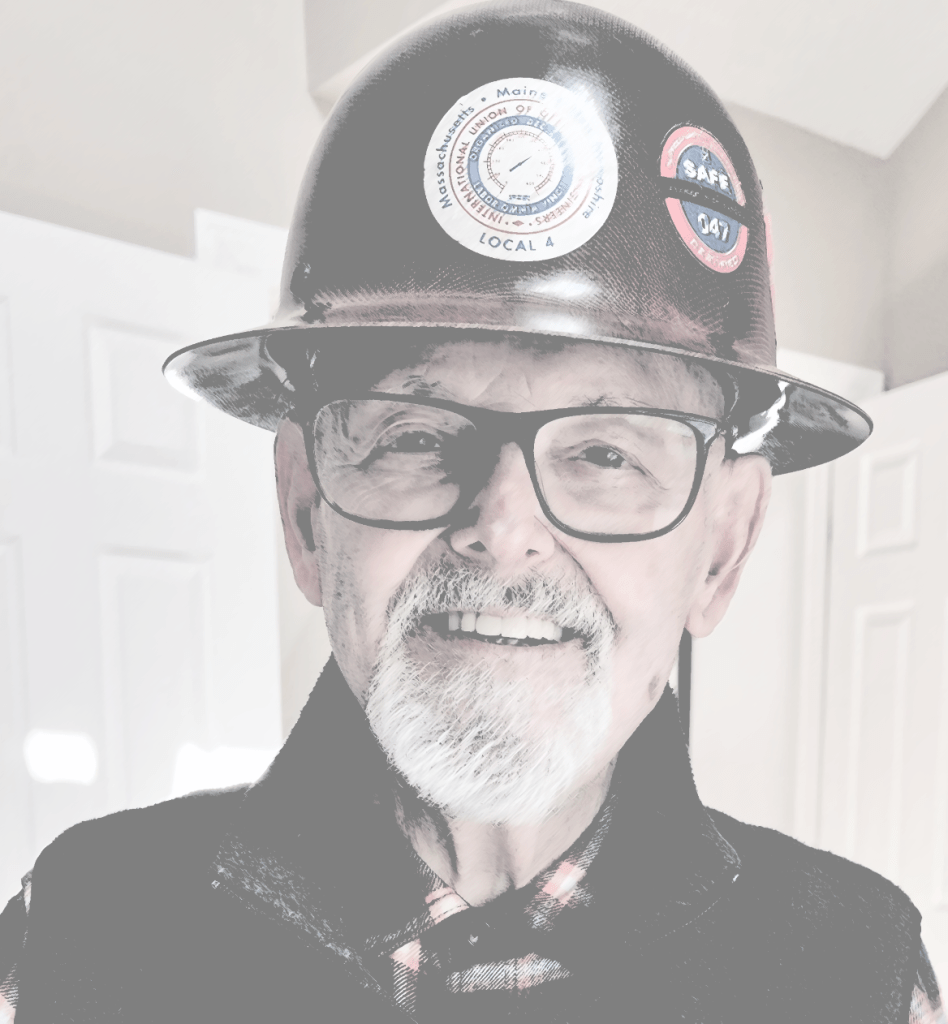
The man with a perfect safety record was no slouch. He couldn’t bring back the dead husband… But with a little wax on a thick cloth, he could lift some of the accumulated detritus and quiet the griefs it memorialized.
I stood in my parents’ driveway in the quickly fading light of a late September dusk. The mist rising from the trees and the tinkle of leathery foliage signaled summer’s undeniable end. I shivered a little waiting for my 82-year-old father, who had disappeared into the garage to fetch something automobile-related.
He thought I needed help inflating my tires with a newfangled device powered by the car’s cigarette lighter. But I knew how to fill tires. The true reason for my visit was something my therapist had said. I had worked with her for a decade to grieve a deeply unhappy childhood, only to arrive at the new grief of my father’s worrisome dual diagnosis of congestive heart failure and vascular dementia.
“Make the time while you can,” my therapist advised, “and say what you need to say.”
Her admonition reminded me of a favorite line from the Book of Common Prayer. “Most merciful God,” I recited on the rare occasions I attended church, “we confess that we have sinned against you in thought, word, and deed, by what we have done and” (the part I most loved) “by what we have left undone.” Neglect of an ailing father, even one whose rage had marred my childhood, was one such sin of omission, as was the sin in the prayer’s next line, “having not loved our neighbors as ourselves.” I wasn’t overly religious, but “love one another” seemed about as good a rule as any to live by. Unfortunately, seeing my father meant also seeing my mother, and she and I were like oil and water. “Why are you doing this to me?” was her stock response whenever I broached my childhood, as if reflecting thoughtfully on old sorrows constituted the deliberate infliction of new ones.
What made it easier to talk to my father was the recent death of my husband, whom my father had dearly loved. Weeping openly about my loss was how the man who had ignored a child’s anguish unexpectedly stood with an adult daughter in grief.
I wanted more of that presence, but my mother grew nervous when he went out without her. Asking for automotive help—even unneeded—seemed the best way to get him alone.
When I arrived, she was upstairs putting on makeup, and he was in his basement bathroom, shaving. The house smelled faintly sour, like a damp pile of unwashed clothes—the proverbial “old people” smell. My mother limped to the top of the stairs in an oversized tee-shirt. A red line in her chubby leg told of knee replacement, and the white part between her rollers betrayed dyed black hair.
“I have my woman’s meditation group today,” she called. “I’ll be down in a minute.”
Then my father came upstairs, his new dental veneers gleaming in a thin face with pale blue eyes. He was pulling on his jacket, when his cell phone rang.
“The doctor,” he said, covering the receiver, “calling about my blood work.”
He sat down with a pen and paper. I could hear the doctor saying his “levels” were up and asking if he had consumed leafy greens or wine, or been sick. He was taking something for an infected tooth, he told her, and scratched the top of his head.
“I know the name of the medication,” he said, his eyes closed, “but I can’t remember it.”
“Penicillin,” I offered, but he waved me off.
“Penicillin—that’s it.”
Aha, said the doctor, that was the problem. He’d have to adjust his blood thinner, tapering the dosage every day until his dental work.
My father asked her to repeat the instructions, jotting them as she spoke. Afterwards we checked his version against what I had typed on my cell phone. They matched.
My mother appeared, dressed and smelling of lipstick.
“The doctor’s instructions.” I handed her the paper.
“I don’t need them,” she said, pushing it away. “I’ll call her later.”
“You don’t have to. I wrote the instructions out, and so did Dad.”
“It’s better if I do it,” she said. “He’ll lose it—he forgets everything.”
My father lowered his eyes.
“But Mom—”
“I don’t have time to talk about this, I have to leave.”
My father put on his baseball cap, and we walked outside. His job was to hold the valve-caps while I attached the hose to the tires. After we filled them, I suggested we “take the car for a ride,” something I had heard him say numerous times. He might forget where he put a piece of paper, but he could tell a soft tire from a hard one by how well the car hugged the road. After forty years of driving, I relied on an indicator light that mistakenly went on when the temperature dropped a mere ten degrees. His more finely tuned sensor had been honed by years of driving.
My pressing the keyless ignition initiated the usual exchange.
“Is this thing on?” he asked, wide-eyed.
“Yup.”
“No key?”
“Nope, no key.”
“Jeezus Christ, it’s barely whispering.” He laughed. “This damn car would drive me crazy. I would never remember to turn it off.”
I tell him the car beeps if it’s left running, and each time he observes, “You don’t say?” Then I remind him to fasten his seat belt, and as the car glides silently over the road, he gives a slow whistle.
“Un-bee-lievable.”
We pulled into Dunkin’ Donuts, where he perseverated over a coffee—cream, two sugars—and a toasted plain bagel. The cashier gave an old-men-are-cute wink, but I looked away, irritated. I was closer to my father’s generation than hers.
“What are you having?” my father asked.
“Black decaf.”
“Jeez, if I’da known you wasn’t gonna eat, I would have saved you the trip.”
“You need to eat more,” I said. “You’re too skinny.”
“I’m up a few pounds.” He stuck out a leg as proof. In shorts, his once-muscular calves were shrunken and mottled brown, the tell-tale sign of a congestive heart. Having cut out salt (for his heart) and sweets (for his gout), he complained that nothing tasted good anymore.
At a table near the window, he unwrapped the bagel.
“I can’t eat this whole thing,” he said. “You want half?”
I shook my head. “Eat what you can.”
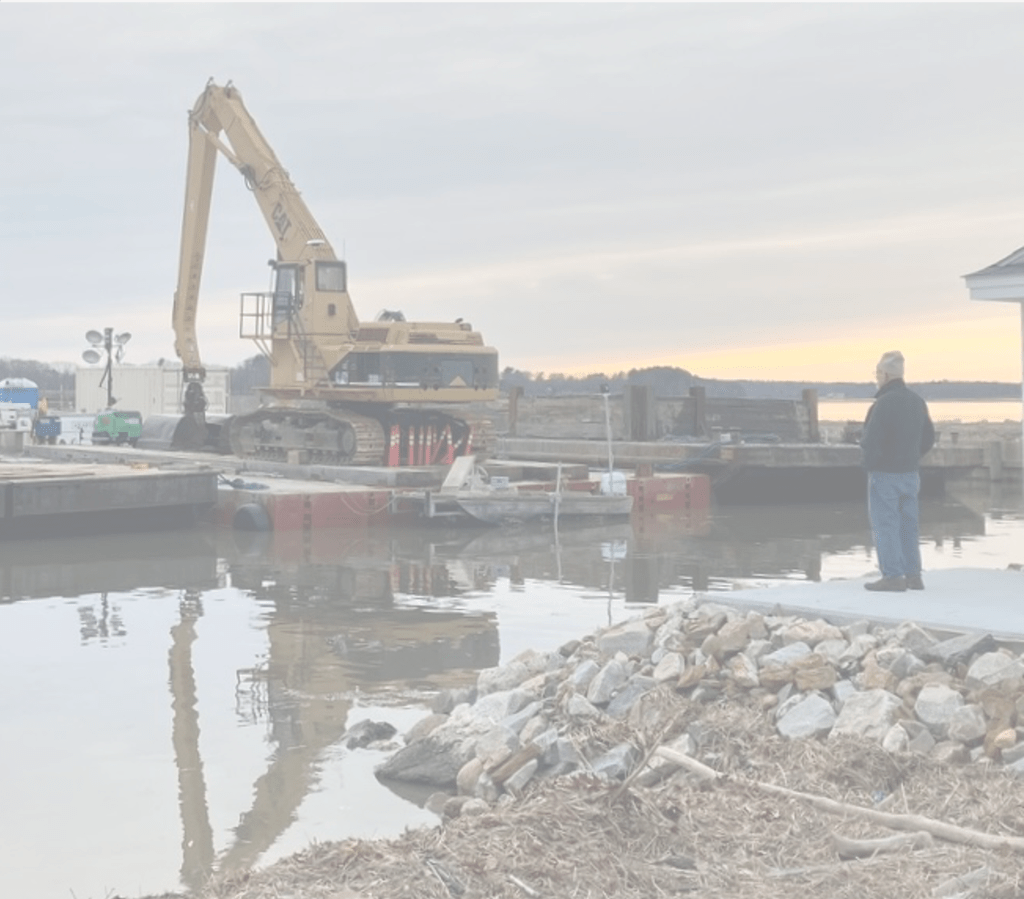
He ate better when he was distracted, so I described the demolition of a five-story brick building across the street from my office at Boston University. A massive excavator had chomped its way through piles of brick, concrete, and steel, then dropped the debris in a dump-truck a block long.
“Did you ever operate an excavator with jaws like that?” I hinged my hands at the wrist, opening and shutting the fingers.
“That bucket is called a clam,” he said. “No, I never did that, but I did everything else.”
Which machines? I wanted to know.
Backhoes, bulldozers, front-end loaders, and excavators.
“How did you know how to operate all of them?”
“I taught myself,” he said bluntly. He set down his cup then clenched each hand around an imaginary lever and sat back as if he were driving. “A machine is very simple. You got two levers, and two foot pedals. You press on one, you go back, and on the other, you go forward—”
“Where’s the brake?”
“There’s no brake on a backhoe.” His sudden smile was dazzling. “You are either going forward or backward. If you want to stay put, you drop the stabilizers.”
I had seen the shafts that came down like grasshopper legs.
“But didn’t you have to take a licensing test?” I asked.
“You bet I did. I studied my ass off for that thing.”
“When was that?”
“Must’a been 1966,” he said, chewing thoughtfully, “because we had just moved to Clearview Road.”
The first house he had owned: I was a toddler.
“You worked at Boston University, right?” I asked, knowing the answer. “Where else?”
The Prudential Tower, Statehouse, Logan airport, the Big Dig, the Orange, Red and Green subway lines, Northeastern University, MIT, and Harvard Square. All the city’s hospitals, too—Tufts, Mass General, and Boston Medical Center.
“Christ, I worked everywhere,” he said. “And I’ve seen shit you wouldn’t believe.”
I knew some of the stories, like the time he deflected a solicitous prostitute by sending her on to an unsuspecting and particularly hated boss (“a real ball-buster”). Or the time he dug a huge foundation, only to learn that the dirt pile rolled downhill and landed against the door of “a Chinese whorehouse.” My father was called back to Boston to dig them out, at night, under gigantic flood lights. I laughed, remembering.
“I do love watching that excavator,” I said. “Yesterday a guy climbed on the truck bed—”
“That’d be the driver.”
“—waving to the operator, and I watched that clamshell-thing tap in big pieces of steel and concrete until the truck was packed.”
“He’s making sure he has a full load—it costs a lot to haul that stuff away.”
“I kept thinking the guy might get whacked.”
He stared at me incredulously. “Do you know how many times I showed up and they told me to roll up my sleeve?”
“For a blood test,” I guessed, “for drugs?”
“Damn right. You don’t screw around on those big machines. You could kill someone.”
I remembered the day a year or two earlier when he had received his 50-year certificate from Local 4. A proud union man, my father had a perfect safety record.
“Not one accident in fifty years,” he said, punctuating each word with a pointed finger.
“That’s really something.”
He wiped his mouth and sat back.
“The first day on the job, I’d always show up early, so I could check it out. A lot of people won’t do that.” He pierced me with an inquisitive frown. “Do you know I was the only guy who used ear protectors? A job’s a noisy place—you gotta be able to think straight in that racket.”
I did indeed know: Sometimes he came home with his ear protectors still hanging from his neck. He had worn long underwear, a muffler, and thick leather gloves in winter, and in summer he made sure to cover his head. Preventing cold or sunburn on the job had been second nature. Preventing the accelerating loss of memory—that was not as simple.
“Does Mom always call the doctors back after you talk to them?” I asked.
He nodded. “The other day I was counting out my pills—I had just come from the drugstore, and I wanted to make sure they were all there—they’re expensive. And she lit into me, shouting about how I shouldn’t dump ‘em out.”
“I don’t get it.”
“I like to count ‘em,” he said. “And that’s her job, checking to make sure they don’t screw you over at the drugstore. I said nothing—I can’t handle the yelling anymore.”
Since her cancer diagnosis, my mother slept twelve hours a day. I knew that calling their house in the early morning was the best guarantee that my father would answer. He loved those quiet solitary hours when he could drink his coffee, read the newspaper, and fill his birdfeeders. When he answered, he would often say, “Your mother’s still asleep. The rest’ll do her good.”
It did him good, too.
“If anyone had told me this is what it was gonna be like,” he observed wearily, “I wouldn’t have believed it. Me with a congestive heart, your mother with cancer. We’re at the doctor three, four times a week. Christ, I can’t keep track.”
“I thought Mom was doing better.”
“She wheezes something terrible. And she can’t climb the stairs. I’m constantly scared she’s gonna fall. She’s gone down a couple of times already, and I’m not strong enough to get her up.”
It pained me that this once-strapping man was confessing to infirmity, and his burden of worry pained me as well. I watched with muted satisfaction as he finished enjoying the bagel. His hands trembled a little as he lifted the paper cup, his skin as translucent as gauze. As a child, I had feared those same hands. Evenings, when he came home dust-covered and grease-smeared, two features stood out: his eyes, white-rimmed from his goggles, and his hands, grime etched in their crevices and smelling of machine oil, an odor that still reminded me of the wallop they left on my face.
Now his hands attested to vulnerability and diminishment and mortality.
His cell phone rang as he was draining the paper cup.
“Mom?” I mouthed.
He winked conspiratorially as he dug out the phone.
“How are you my love?” he asked brightly.
We had been a long time, I heard her say, and we were going to ruin dinner, spaghetti with clam sauce, his favorite.
“Okay, all right, see you soon.” He hung up. “I gotta pee.”
“I know your mother drives you crazy,” he said as we walked to the parking lot.
I wanted desperately to like her, but I couldn’t get past her inability to acknowledge the past or more importantly, to apologize, ever. A key feature of my childhood was the threat of corporal punishment “when your father gets home.” My early infractions constituted garden variety kid-stuff. Refusing the clothes she laid out for me. Squabbling with my younger sisters. Forgetting to take out the trash. Later, as a rebellious adolescent, I “talked back,” rejecting her characterizations of me as a “a miserable wretch” and “a bully, just like your father.” She could go from zero to sixty in a matter of minutes, “sixty” being screaming jags that ended only when my father came home. That’s when she would report me for being disrespectful or uncooperative and insist that he—the putative “bully”—would put me “in line.” Being hit was bad, but her damning tirades were worse. I would later come to believe that, having quit college to become a mother, she bore an unresolved resentment that had gathered force as the years progressed, becoming increasingly unrestrained.
If insight healed relationships, I would have been fine, but insight wasn’t repair. A heartfelt expression of remorse holds unparalleled power to heal. I knew that, because my father had found it in him to apologize. A few months before, when I had visited him during a stay in the hospital, he had tearfully blurted out: “I know I was hard on you when you were young, and I’m sorry.” Those simple words had dispelled years of anguish, and I felt lighter, immediately. In the ensuing months, I learned about my father’s own childhood trauma from his father’s sudden death and unexpectedly discovered that his punishments had been a misguided effort to quiet the intolerable “yelling.”
“I can’t stand how controlling she is,” I said. “And she doesn’t listen.”
My father, who apparently knew something about things undone, stopped walking.
“Your mother can be a real pain in the ass. But we’ve been married almost sixty years. I’m staring down the road, and there’s not much left of it for me. You can say the glass is half-empty or half-full. And you know what?” He leaned in, his blue eyes wet. “There’s more good in her than bad.”
I looked away, unsure I shared his belief. “We better get going.”
When we pulled into his driveway, he didn’t hustle up to the house. Instead, he performed his ritual “walk-around.” For years, whenever I visited, he would immediately circumambulate my car, bending down to pick off bird-poop, finger a scratch, or kick a tire to see if it was soft. I still remembered his complaint that I hadn’t cleaned the Cheerios off the floor of the Volvo I got out of my divorce.
“This is probably the best car you’ll ever own,” he said at the time.
“Every mother of a toddler has Cheerios in her car,” I had replied irritably.
The toddler-son had grown up and gone far away to college, in touch only sporadically. Gone, too, was the expensive Volvo, having been replaced by one stripped-down Prius, then another.
Now the bottom of the car’s back door bore a faint scratch from a collision three years earlier. The day it happened, I was on a mission for protein drinks. My new husband of only five months couldn’t hold down solid food, a punishing side effect of chemotherapy. My mission had been ended by the Mercedes that rear-ended me in the Whole Foods parking lot. The resultant scratch reminded me of a long sad summer that I preferred not to think about, so instead I studied the purplish clouds.
But my father had eagle-eyes. He leaned over cautiously to examine the nicks and scrapes in the paint.
“Mom’s gonna be pissed,” I said after a few minutes.
“That’s all right, your mother can wait.” Then he disappeared into the garage.
“Did you find what you were looking for?” I called after a few minutes.
My father reappeared waving a green bottle and a red rag.
“See this? Five-ninety-nine—cheap.” Then he finger-spelled the label. “T-U-R-T-L-E –Turtle Wax. Watch what I’m gonna do.”
He put a pea-sized drop on the cloth and carefully buffed the scratch away. Then he picked off the crust of grit and dead bugs underneath the back windshield.
“Jeezus, this stuff is like cement,” he said. “When’s the last time you got this car washed?”
“I’ve never had it washed.”
My father popped straight up, his mouth round with astonishment.
“Say that again!” he said, fixing me with an index finger, as if he had heard incorrectly.
“I’ve never washed this car.”
“You’re kidding!”
“What’s the point?” I said. “I park under a tree, and the tree is full of birds.”
He spread his arms, the green bottle in one hand and the red rag in the other, in a gesture that resembled the blessing of bread and wine.
“You gotta wash your car,” he said almost plaintively. “And wax it. You wash and wax it, you’ll get top dollar.”
“But I’m not selling the car—I’d have nothing to drive.”
“Not now you aren’t,” he said. “But someday you will. I put a little wax on this baby, it’ll look brand new.”
While there was still enough light, he walked around the car and buffed out every scratch he could see, all the while muttering, “I cannot believe it.” Then he lifted the hood and cleaned out the pine needles trapped around the edges of the engine, his voice full of regret. “Jeezus, it’s a goddamned mess under here!”
I closed the hood, and we went up to the house. My mother stood in the doorway, the aroma of clam sauce wafting from the open door.
“You’ll never guess what your daughter just told me,” he announced as if it were big news.
“What?” my mother asked quickly. “Is something wrong—are you sick?”
My father interrupted. “How many times do you think she has washed that car since she got it?”
“I don’t know,” my mother said. “Twice?”
“NEVER,” he said, punctuating his word by bending at the waist. “Not once.”
“You’re kidding me.” Her eyes widened. “Why don’t you wash your car?”
They stood side by side, pinning me with a mutual expression of incredulity. Even in adulthood, my errors were the apparent recipe for marital unity.
“Have you two forgotten,” I replied a bit jauntily, “that this summer, I roto-tilled my entire front yard? And reseeded it? And built a fence and had the house painted? There’s only one of me.”
My father shook his head regretfully at the oblique reference to my husband’s death.
“I keep telling you, you got no business doing that stuff.” He often admonished me that a woman my age—mid-fifties—shouldn’t be chopping down trees, shoveling snow off the roof, or climbing a ladder to clean the gutters. But it wasn’t just property upkeep that bothered him. I got the same safety lecture before my annual solo hiking trip, the last time, driving that same poop-dotted Prius onto a ferry and over the rolling hill-country of Nova Scotia in search of his forebears.
“You gotta be careful,” he said. “You’re not young anymore.”
That was rich, I thought: He was the only family member as stubbornly self-reliant as me, having retired from heavy construction when he was almost seventy.
Instead I said, “Gee, really? I forgot.”
“You can laugh all you want,” he said. “What are you gonna do if something happens to you?”
I winced because I knew he was actually wondering, what would he do?
“Something will happen to me,” I said quietly, “just like it will to all of us.”
“Don’t say that,” my mother said, her voice cracking at the intimation of mortality. “You’re not gonna die.”
“Not any time soon, I hope,” I said.
My father coughed to conceal sprouting tears, then crossed his arms and wagged a finger.
“The next time you come up here,” he said, “I’m taking you where I take my car. I got a friend who’ll do it all—wash, wax, the whole nine yards—and you’ll see what I’m talking about.” He punctuated his promise with a salesman-like jab of his finger.
“And I’m gonna buy you a bottle of Turtle Wax.”
The man with a perfect safety record was no slouch. He couldn’t bring back the dead husband, reel in the uncommunicative beloved son, or re-floor my outdated kitchen. He couldn’t undo a wounded childhood or persuade me of my mother’s overall goodness. He couldn’t even keep my vehicle clean; dents, bird-poop, and rust were guaranteed. But with a little wax on a thick cloth, he could lift some of the accumulated detritus and quiet the griefs it memorialized. He could give my car an almost perfect finish.
That was, after all, what we had done for one another, each buffing out what loss had carved in the other.
“Can’t you stay for dinner?” my mother asked, but the invitation sounded more like a worry, and it occurred to me that so did much of what she expressed. An unkempt house. The uncounted pills. An overcooked meal. And maybe even the daughter who seemed to undo her orderliness. What was her current worry, I wondered: A lost chance for connection? A fabled family dinner?
Death?
My father must have sensed her worry too, because almost imperceptibly, he leaned toward her, and—sensing him there—she reflexively leaned back.
And there it was, I thought, the lesson on things “left undone.” Leaning toward her was an offer of consolation, an unsolicited balm for unspoken worry, a bit of the proverbial good that outweighed the bad. Perhaps my father had considered something I hadn’t: that one needed to admit being broken in order to face the undone. That might mean that he and I were stronger than my mother. And if that were true, then I was not only neglecting but also judging her.
“Not tonight,” I said softly. “I have to prep for class tomorrow.”
Darkness had fallen. The doorway was a frame of yellow light, and inside that frame was the pair that made me. For the first time, I realized that whatever glued them together was something I might never understand, because it belonged to them alone. Awareness of that bond was both a comfort and a reminder that some scratches might be too deep to buff out. But perhaps I could learn to live with them.
I hugged my frail father. Then I leaned over my very short, very round mother and cautiously hugged her as well.
“A carwash, Dad,” I called over my shoulder as I left. “It’s a date.”
#
Windhover Journal, Issue 25.1, February 2021
 Melanie S Smith