
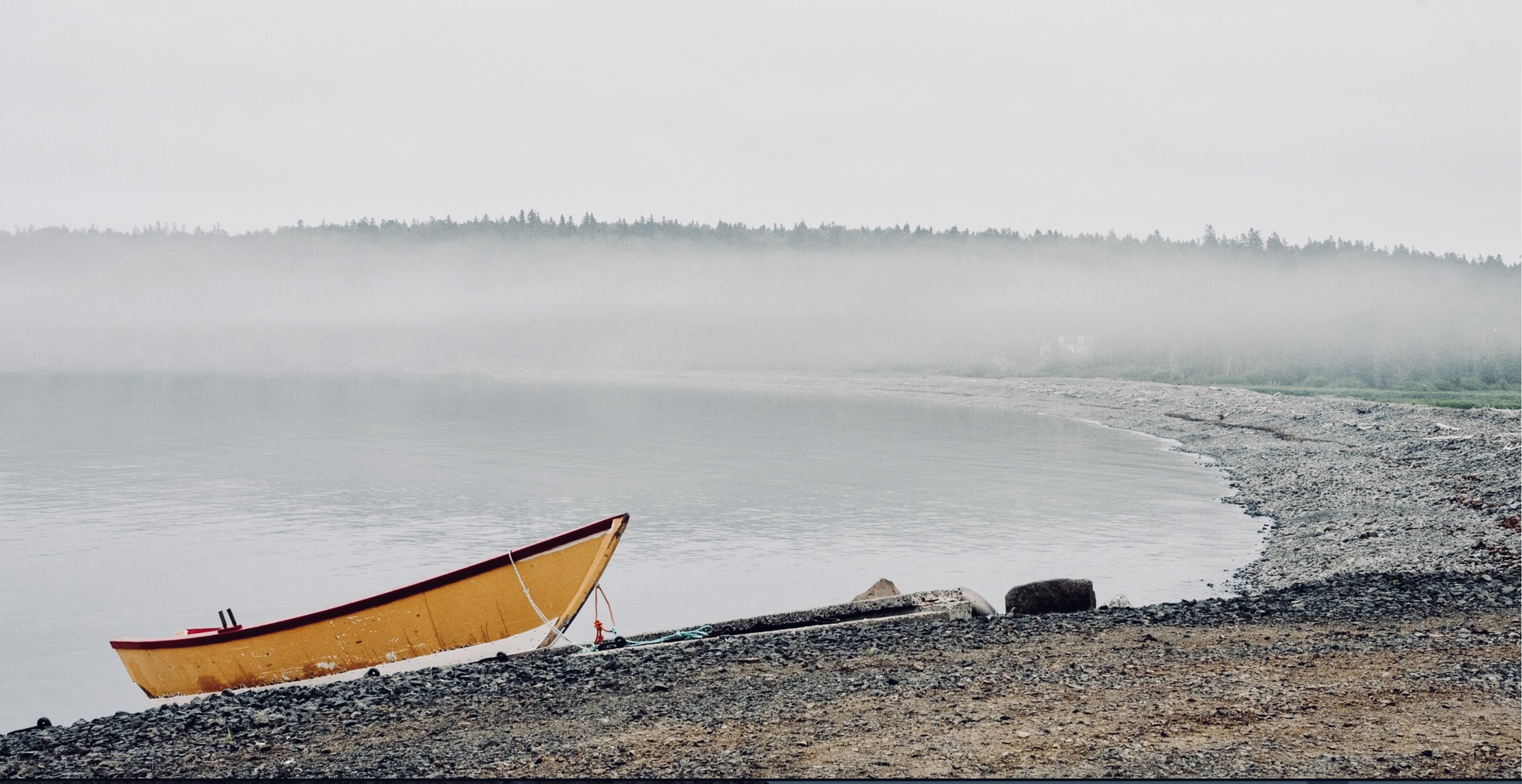
The first title of this essay was “All the Men I Love Are Hoarders.” But that wasn’t quite right because some of them are collectors, and some are not. It evolved into “The Men I Have Most Loved Are Hoarders,” which is closer to the truth but leaves out an essential piece: the obsessive collecting of supposedly useless things is—surprisingly—often entwined with a keen sensibility. But this essay is not about men; it’s about me. I fall in love with societal outcasts. What appears to others as a pathology is—to me—an atavism to earlier time when ancient people ingeniously charred the end of sticks to draw on cave walls. That’s as close to an explanation as I have. There’s an urge to have, to hold, and to leave a mark, or if not to leave a mark, to build an enclosure for the self. A fortress of stuff gathered up the way children use their arms to sweep sand into fragile walls and castles.
It’s guilelessness I understand.
II
Material hoarding is the stuff of reality TV. A compulsion so disturbing, we want to look away but cannot. They fascinate us, the piles, the filth, the way a home is more mouse-midden on steroids than human habitat. Goat paths, they call the narrow pathways that wind through piles of papers, bags of refuse, collapsed and stained cartons, and unidentifiable rot. All my associations are horrific. Thin-limbed children outside Mumbai scrambling over a Sisyphean mound of steaming garbage for salvage or food scraps. My obese aunt’s refrigerator, crammed so tightly with spoiled food that snow had formed around the freezer door. Even the inside of a Walmart, smelling of off-gassed petrochemicals and piled with discount plastics that will be in landfills within a week. I can’t help but think of Job’s suffocating ordeal on the dung heap. A hoarder’s habitat often barricades its resident from the outside world, or perhaps more accurately imprisons them.
What kind of a person would elect to live in such an environment?
I remember Rose, the octogenarian across the street from the house in which I raised my now grown son. Tiny and bent, Rose nonetheless crept around her English-garden front yard to prune flowers and trim the hedge. Once she even climbed out on the roof to scoop rotten leaves out of the gutter, until I telephoned the man next store and had him go over to coax her back from her precarious perch. Still, she was the embodiment of moxie, and I was curious. The November day my son and I were making gingerbread and ran out of baking powder, we crossed the street and knocked on Rose’s door. She opened it barely a crack, releasing a hot fetid wind. Yes, she had baking powder, she said, and shut the door to fetch it, leaving us on the stoop outside. Later I opened the half-empty can to find a concrete pebble of unusable powder. The expiration date on the can was 1987—the baking powder was over ten years old.
One frigid night the following February, we were awakened by the sound of a fire truck. I looked out the window to see the red engine and an ambulance. “I hope she hasn’t died,” I told my son when Rose’s front door opened and two EMTs emerged bearing a figure on a stretcher. But a minute later, Rose followed, wrapped in a blanket and supported by a firefighter.
I had lived on the street for three years, never once having seen another person enter or leave Rose’s house. The next day, it bore a crisscrossed barrier of yellow crime scene tape, and the neighbors wandered out to share what they knew. Rose, it seemed, had an elderly woman companion who had fallen and been found on the floor next to a stopped-up toilet, having lain there for days before an ambulance was called. There was no more information than that.
A few days later, seven white trucks pulled up and men in hazmat suits got out. They ripped open the tape and entered the house, emerging one by one with enormous black bags full to near bursting. This ritual lasted three days, and when they had finished, one of the men told me they had filled 700 bags and four trucks.
“She had newspapers from World War II,” he said. “Wall to wall stuff. The kitchen is pristine, exactly the way it was built in the 1930s. But the whole place stinks.”
A year later, Rose’s niece had taken over the house, clipped back the flowers and restored the lawn, and I never saw Rose again.
III
There’s the obvious Freudian response: “Your father must be a hoarder too.” But my father is a purger, the anti-hoarder, unless you think of his discarding things as a hoarding of space reclaimed from my mother’s boxes of old photographs, dried out tubes of paint from her art school days, basketry and dried flowers, and freebie knickknacks and mugs acquired at the casino. My mother wasn’t a true hoarder though when she died, my sisters counted sixty pairs of unused slacks in her closet and several dressers full of unworn shirts and sweaters in a variety of sizes, under which she had stashed the scattered contents of our baby books: cards, envelops with locks of our first haircuts, and an occasional knit bootie. The rest of the house was like a 1970s spread from House Beautiful. Ethan Allen furniture, matching drapery, cut crystal candy dishes, and a reproduction grandfather clock. All except the attic, which my elderly father routinely tours to complain about all the boxes of “shit” up there. Occasionally he goes on a tear, particularly since my mother died, and trashes irreplaceable family heirlooms along with the baskets and crumbling flowers. His dislike of useless things is equal in measure to the hoarder’s love of the same, and so they share one reference point, like two mirrored faces on the same locket’s hinge.
My first love was not my father but my maternal grandfather, a wiry Sicilian whose head was encircled by a wreath of smoke from the cigarette that dangled perennially from a yellowed lower lip and whose oversized hands, best suited for boxing, were gentle to the touch—except when they were flinging dishes of food he thought my grandmother had improperly prepared. Nonno had a volcanic temper—he had grown up in the shadow of Mt. Aetna before immigrating to the United States—reserved for Nanna alone. He treated me, his first grandchild, with nothing short of devotion. “You are the apple of my eye,” he proclaimed when I was about four, what the poet Gwendolyn Brooks described as a “gobbling mother eye” and that I had to ask my mother to explain. I knew that I need only ask and the child sitting on his knee would be nudged off so I could take the throne. The aromas of tobacco and shaving cream and sweat, and sometimes sawdust, clung to his yellowed white undershirt and his polyester pants were slippery under my legs. Collectively, a thrilling elixir, particularly when Nanna put on a Dean Martin or Frank Sinatra record and Nonno danced me around the room, each of my feet on each of his and those big warm mitts holding me close.
Unlike my father, Nonno did not have a pickup truck in which to carry his tools. He drove an emerald green station wagon crammed with tools and hardware: hammers, rotary saws, drills, levels, glass cutters, nails, screws, putty, and so on. A two-story ladder was affixed to the roof. I loved being in that car. It smelled of stale cigarette smoke and hot vinyl, and whenever he made a turn, the entire contents of the back audibly shifted and the ladder on the top swung slightly like a pendulum from one side or the other. But his talk rather than his car proffered evidence of hoarding. He amassed longstanding grudges and equally longstanding misinformation, and it came out in a consistent stream even years later, when he suffered from dementia. The grudges were against the fat cats, the Republicans, Nixon, the “chiselers” (‘big business’), the Cincinnati Reds (the baseball analog of Republicans) and, of course, my grandmother, who could never seem to cook, drive, or play a game of cards to his satisfaction. His encyclopedic misinformation was fascinating and often nauseating. A bit of charcoal on the tongue helped with indigestion. You could remove a boil from the back of the neck by pressing it with a warmed glass bottle that sucked out the pus when it cooled. Cats always land on their feet, which he demonstrated by dropping my kitten a few feet (an experiment I copied by throwing our cat out a second-story window—it ran away). Drinking a raw egg in red wine fortified one’s constitution. Olive oil cured everything from excessive ear wax to toenail fungus. The ship that had carried him to America had lost its power in an Atlantic storm and when it entered New York harbor a week late, his favorite meal of pasta with chickpeas was prepared at Ellis Island for the half-starved passengers (I have never found historic documentation of this disaster). Hysterical women could be calmed with a knuckle punch to the chin, which he had delivered when Nanna freaked out during her first driving lesson. And so on.
I begged him to tell his preposterous tales—except for the ones about abusing my grandmother—again and again. Now I think about where these fabulous threads were spun. In Sicily, where cats dropped like rain? In a tenement in East Boston, where people poured olive oil into ears and swigged raw eggs? Each is a bit of color in the textile that is my grandfather, a fiery, stinky, would-be pugilist who withheld nothing from me. His best wisdom, his weirdest stories, his authentic self—including his confessed rage—was an open book.
IV
My mother’s brother, Nonno’s son and my only immediate uncle, was an ordinary postal worker by night and a philatelist, collector of Bette Davis memorabilia, and expert on the French Revolution the rest of the time. In his later years, he created small sculptures with clay, shells, buttons, glitter, and paper clips, and painted them with acrylic paints. The last time I visited him, he drew out from under his bed an enormous tray of rocks—a hundred or more—that he had painted with bright colors and shellacked. “My little friends,” he smirked with a knowing wink. His creations were his therapy, he said; as a child he had been relentlessly bullied by school mates for what was then called “crossed eyes” and—according to my uncle—by his father for being a “mama’s boy.” I adored my uncle for the same reasons I loved Nonno and because his divulging a trauma history earned my trust. When in my lonely thirties, suffering from depression so severe I contemplated suicide, I telephoned him and he scooped me up in his car and drove me to a beach that we walked, headlong into bracing wind, as I cried and he urged me, “That’s right, get it all out.” Then we visited Nanna’s grave so he could talk to “Mama,” with whom he was close. Afterwards we people-watched from a café window, and he made me laugh by pointing out the “throwaway people” who were far more pathetic than us. Cruel, but it worked.
A collector of stamps and art books and 78 records of Italian opera, sad songs in a language I didn’t understand except that, sitting at a table with my uncle as he fed me a plate of olives, anchovies, and crusty bread, I understood: the undertow of melancholy, briny and bitter, that is lost love.
What makes all of this hoarding is the insistent quality of the accumulation and how, over time, the stuff itself—the sounds, the textures, the olives, rocks, and window putty—become a tide of singularly evocative experience, the physical and sensory embodiment of what T.S. Eliot called the “objective correlative,” but attached to an individual rather than to words.
V
My college boyfriend and first love was a bearded Quaker entirely ill at ease with tools, but he knew American roots music because he had been collecting it since adolescence. Chuck Berry, Aretha Franklin, and Jimmy Rogers among others crammed the shelves that lined his bedroom. I developed music appreciation sitting on the floor, listening as he spun old vinyl on a turntable. Not surprisingly, after college, he would grow an even longer beard and a ponytail and create a job for himself as college archivist, collecting letters, photographs, and memorabilia from the institution’s founding fathers.
My first husband was a wealthy hoarder of money, which is not useless, but for him was a means of power and control. In the ninth month of my pregnancy, he got the crazy idea that I would abscond with his thousands and bear our child in some unknown location; this fantasy was the culmination of months of his increasingly paranoid and narcissistic delusion. He deposited all our savings in a personal account so that I had to request money for groceries, gas, and other necessities. Years later, he dragged out custody proceedings that I was certain to win solely to bleed dry the retirement account with which I intended to pay my attorney. By then he was a millionaire many times over, and I had nothing but some equity in a house and my 401k, which is all to say, along with his money he hoarded hatred, perhaps the most useless possession of all.
My second husband was the son of the kind of hoarder on TV shows, and he inherited all her stuff. It moldered in a garage so chock full, the door could not be raised: old furniture, silver, and rotting photograph albums reached all the way to the ceiling and blocked the garage door mechanism. The marriage didn’t last because, among other things, he loved his antiques more than he loved me.
My third husband hoarded the fleeting joys that are the province of those who die too young. A butterfly wing, a sunflower, a tidal pool, sunlight on the cheek of one’s beloved. I know because I gave him a tablet on which to jot estate-related tasks for me, but instead he recorded moments of happiness and dropped them inside a decorative pitcher. Cancer claimed him five months after we married, and I inherited the bewilderment of those who are left behind, too young, along with a jugful of folded notes that were more like psalms.
“I loved hearing you sing in the shower this morning,” said one, and another, “I’m glad you are writing again.”
The notes were a reminder: love life as the dying do.
Three marriages is a lot by some standards, including those of the youngest sister who thinks but never says that I am a “slut.” “You’ve had so many boyfriends,” she’s said with more than a hint of disapproval. I think of it differently. A person who, despite relational trauma as it’s politely called, continues to seek love is one somehow undaunted by the prospect, which is to say, a person who wants to heal. The beloved husband who died too young loved me with a singularly fierce devotion, and I returned the same. The experience changed me for the better…though it also left me with the wisdom that death defines life.
VI
The “affair” began innocently enough six years after my husband died, the way most romances do today, through an online dating site. I had scrolled through hundreds of male profiles, most sporting an I-just-caught-a-fish photograph, second only to pictures of motorcycles. But not this one. A handsome mustachioed man in rubberized overhauls knelt in briny water looking at a tray of seed clams or “baby bivalves,” as he would later call them. His face was partly turned toward a second man, but his expression was nonetheless visible: pride and even joy. Later I would learn that he had no children, had been married once for mere months, and lived an eremitic life surrounded by books and tools. But what I saw was the biblical Joseph, kneeling and reverent.
I’ve landed on your profile a bunch of times and I like it. I’ve just come from Nova Scotia, where my father’s people were fishermen and blueberry farmers. It’s a no-bullshit place, where they are from, with thrifty people who could take care of themselves. I love it there. So I thought I’d say hello. If I could take a year off and do what I like, I’d hang around a boatbuilding place. Dories maybe.
I also confessed to a dislike of the way men name-dropped kayaking as a signal of virtue before signing with my real name, which was concealed on the site. I was completely surprised when he wrote back.
Hello interesting Melanie. Actually, my father’s people were from Cape Breton, at least my grandmother. A mad lot, I’m told, not having been there I only have my father’s tall tales to go on. Don’t get me started on plastic kayaks- I’ll make an exception for double-paddle lapstrake canoes which are sexy little things, but those injection molded speed bumps on the water, argh. May I commend to your attention John Gardner’s The Dory Book, if you’re not familiar with it already?
My old man was a carpenter, and cabinetmaker, furniture guy, Naval architect/marine engineer manqué, and a boat-builder. He trained me. With a love for tools, some skills, and a curiosity, I’ve spent my life chasing to the detriment of everything else. My specialty was wooden commercial boats. 40 feet and up. Usually a one-man show, training helpers as I went. And there’s a couple others around here, small boat guys mainly. And some of us like to row.
He directed me to a photograph of
a pretty boat and an ugly guy…Neanderthal posture and the hands like baseball gloves. And you can see the seats and the tracks [the boats] run on, like a Head of the Charles shell, so it’s not just arms and shoulders but rather legs, back, arms, recover, using the strength of the legs to add in quite a lot of power and endurance. You can’t see the oars…The blades are tiny but you can pull them hard so they flex and twang just a little.
They sing to you.
A boat whose oars sang, bearing a guy—this guy—with hands made for building them. The oars sang to the boat, and though he didn’t know it, “Micky” was singing to me. Poetry.
Maybe it’s historic memory or having just returned from the foggy coast of Nova Scotia, but …is it possible that a dory can express longing? They are quiet poetry, not to be too stinky fartsy about it, but it’s like the bucket of old tools my father gave me that I take out just to hold. Like fuck, I’m in suburbia where dreams go to die, but my peeps practically lived in boats, and maybe it’s in my DNA?
He wrote back within hours.
Rediscovering who you may very well be is priceless and never too late.
I sometimes sing while I row. I row better than I sing, but the songs keep me on regular pace. And keep the gulls at a distance.
I replied:
My father was born near Digby but grew up on the Argyle Sound and in a little village called Sandford, which boasts the world’s smallest draw bridge. I used to hate going over that bridge to get to the boat, so Grampy would haul me under his arm. The place hasn’t changed. Two roads, two churches, and a wharf with boats. I remember scanning for Grampy’s boat with a telescope mounted over the kitchen sink so we’d know when to have supper.
Nova Scotians speak more slowly, move more slowly, and say a lot less. I like it that way. Last time I came, my uncle took me clamming. It was morning but we drank beer and dug for hours, then filled up a pot with sea water and set it over a fire. Sat with blankets over our laps and ate steamers, pickles, and beer. A perfect day.
My new friend wrote with emergent tenderness:
I can picture you as a little girl on the waterfront, with your wee boots and your wee slicker, setting out.
We have clams here, of course. We also have mussels and fish and lobsters and crabs and ducks and geese and more. I have a boat not unlike that red one in your picture, though mine is white, and depending on the tide and the season I will load on what’s needed and set off. There is the Inlet, where the tide rushes through to fill or empty the marsh. Some days the seas come in and you don’t want to get caught there, instead making your way through the channels to the inside of the spit, the barrier beach, where you can nap and cook and eat, pitching the shells back into the water where they came from.
They have an oyster festival here in October, once a nice little hometown thing it’s now a nightmare of jammed streets and crowds, as an epidemiologist you’ll understand why I avoid it… I used to grow oysters for a living. Fried oysters, lovely, oyster stew simple, creamy and rich and delicious, grand, roasted over coals, sublime. Raw with handling I can’t really trust, as I am surrounded by drunken plague rats in colorful t-shirts and foolish hats as they stream in and out of the beer tent…I will give that a miss.
The first hint of prickle, but—I wrote—“with a sensitive underbelly.”
“Prickles—like those on a thistle—are there for a reason,” said Micky.
Like the baggage that so many want to avoid; if you don’t have them, just what the fuck did you do with your life, that you went through it so serenely that there are no scars, no aches when you move a particular way? Nothing but carefree happy-happy-joy-joy? Give me a fucking break. If you really give a damn, you’re going to get hurt. And get scarred. Hopefully, the hurts aren’t like full thickness burns, where the sensation receptors are gone and no more feeling is possible.
Ah! He had waded into a topic of shared ire—the commonly confessed preference for companions with “no drama,” a phrase I interpreted as “I lack emotional intelligence and do not know how to do relationship repair.” If you’d lived, you’d had drama: births, illness, deaths; tragedies, traumas, angers. The notion that life should be “happy-happy-joy-joy,” as Micky put it, was childish. And the second ah! He was direct and unafraid to speak his mind, in writing, no less. On a whim, I sent him my latest essay, a travelogue of my body, including thinning hair, scars from brain surgery, and an ample “Italian bum.” The title page bore a black-and-white photograph of my back; mostly muscle, nothing titillating.
Or so I thought.
I’m a fool for a nice back, the definition on either side of the spine denoting strength. Good shoulders, interesting earlobes. Nice neck. Fuck style, and fuck makeup. One of my litmus tests is “Does she spend more on books or her nails?” Give me ‘striking,’ ‘arresting,’ something that holds my attention. You pass.
I have a bony ridge on top of my skull, side to side. Trophy of a collision with the top of a bus doorway, absent mindedly leapt from the top step to the ground rather than the bottom. I call it a trophy, not a scar.
You have trophies, too.
I suck at taking care of myself. Both parents died at 60, cancer. I had no plans for making it this far. Hell, I had every expectation of finishing up in a rice paddy in 1973 so I made no plans. If you want an explanation of the madness that overtook young men in the ’70s, we didn’t expect to live past 25.
The third ah.
Melanie and broken men. There was a history. I had thought about it, how working-class men are crushed under the foot of bigger businesses, how they struggle to house, clothe, and feed their families, and how, when they are of immigrant stock, as both my parents were, they have a high bar to jump, as if cutting lumber or digging earth were a proving ground for their value as Americans. And prove it they did, at some cost. Ill health, physical or emotional violence, countless lottery tickets, and as they neared life’s end, a belief that they have somehow failed. They didn’t golf, join country clubs, have second homes, or travel abroad. They cut their own grass and shoveled their own snow, and when a tool or appliance broke down, they fixed it themselves. America is no longer a proving ground for thrift, even if it attests to a resourcefulness once necessary for survival. Perhaps that’s why I identified with my forebears and not the rich husband I married and divorced. The kind of man who would call a fix-it guy for a stopped drain or a radiator that bangs. The kind of man whose success exists but for the reliability of the lesser but more resourceful laborer.
If the broken man is the resourceful one, that’s the guy I want.
I would have guessed that you don’t take good care of yourself, like the word fuck—it’s—a good word—maybe have a motorcycle, and are wicked smaht, as we say. That you eschew bullshit (eschew is a good word too). It sort of radiates from your photograph, which has a “Fuck you if you don’t like it” undertone. The kind of guy who runs toward the spears, as I like to say.
Something I wrote elicited “a roar of laughter. You’ve done a good job of figuring me out so far.”
Yes, I go towards the danger, often the safest way out. Always been lonely. Lived in my own world, maybe, or was outside looking in. Brief moments of fellow feeling, perhaps, when I could let it down, but most of the time the line of retreat was open and screaming at me to run away.
Been on my own…since I was about seven, when my father was driven away. I won’t say I embraced loneliness, more like a dog that always walked alongside me, sometimes a pain in the ass, sometimes it’s the only thing there is. Which is why there were always books and learning.
This I also understood. My loneliness was a vulture that robbed me of sleep.
How many men not only understood but could express such pain?
VII
I was so enamored of Micky that I checked my email multiple times a day, a smile creeping over my face when I saw his name. We wrote to one another so often that I created a folder solely for our correspondence. I had one other folder like this, the contents of which consisted of the first emails from my beloved husband.
I don’t remember how, just that at this point, Micky and I exchanged photographs. His was a selfie, but not the kind from a smart phone; the image suggested a smudged and more primitive lens. And from the looks of it, he was sitting on an unmade bed in a room whose battered furniture was draped with clothes. More important, he was shirtless, an interesting choice since there was almost nothing overtly sexy about him. His hairy shoulders were round and strong, and his chest was hairy too, with pecs that had softened but not yet become feminine. There was a hint of belly with darker hair, as if ageing had started top-down and hadn’t yet reached his midsection. Or the hand that touched his face. Brown and thick and beautiful, a seemingly ageless hand both sensual and competent. I studied the hand, and lastly, the face. Surrounded by wild white hair and a beard, and with a handsome nose, he stared back from even wilder eyes—dark, with points of fire in the center. Mirth or self-deprecation, I couldn’t tell.
Perhaps the smudgy lens and the messy room should have been the first clue. But the eyes and hands transfixed me. Can one’s hands transmit a writing sensibility?
Weirder still, I imagined that meaty hand in my mouth, fingers gliding over my tongue, and I shivered.
Micky had found a visual essay on making sourdough bread that I posted to my blog; there were no photographs of me, only of my hands mixing the slurry and kneading the dough. He boldly wrote,
I like your hands to a degree that’s almost perverse. Sexy, competent, probably taste pretty good too.
The photos you have with your writing: It seems a little, oh, disingenuous perhaps, for lack of a better word at the moment, that you’re not nude. Your writing, well, it leaves you naked, completely open to whoever sees it. Am I getting protective or selfish?
A few hours passed before I got another message, raunchy and bold and thrilling.
You on your back. Starting at your forehead, kissing and licking and nibbling my way down, special attention to the breasts. And further, navel, and further, pulling panties down and following them, one leg then the other, with my mouth. And then coming back slowly, insides of the thighs, legs spreading wider.
You know what comes next…tell me what it is.
What came next was that I laughed and laughed and laughed. I noted also that he said “breasts” and not “tits,” though selective profanities followed. He understood the power of the forbidden to titillate. So did I.
Most men go straight to the fucking and miss the good stuff. The unbuttoning, unzipping, the peeling. The insides of elbows and ankles, the backs of knees.
I laughed again when he wrote back as an afterthought, “Oh, by the way—tell me that you’re not actually covered with tattoos.”
Email sex. I hadn’t ever engaged, but it set me on fire. Alone in my little house, I made what he had described as “sounds that aren’t words.” Loudly. So loudly, I scared the cat.
VIII
What comes next is I drove two hours to meet him at a midpoint; I got out of my car and he got out of his truck, and we practically ran to one another. He touched my face and searched my eyes, and we kissed with such passion that I thought I would break.
Except that’s not what happened.
There were more emails…many more. And presents—a boat-building book and an apple peeler—that suggested Micky better knew me than the rich former husband whose gifts of jewelry and a fancy car had failed to elicit the requisite obsequy, not because I was ungrateful but because of my utilitarian aesthetic. Then I suggested we meet, and Micky replied that he needed to take things slowly. So slowly that the emails were sapped of their juice and evolved into grocery lists—poetic, yes—but long and detailed annotations of the Market Basket weekly flyer. Then recipes, sometimes three in a day, and detailed descriptions of the contents of at least two freezers, filled as a bulwark against lean times. Updates on the jammed guns, shattered keyboards, three-legged tables, and dull-bladed knives he was cleaning, fixing, and sharpening. Micky, it seemed, was not only retired but also disabled by crippling pain. He lived off a combination of retirement income and an inheritance, and in almost indiscernible increments, revealed another kind of scar.
Macbeth ‘…this petty pace, from day to day” ; I’m not just boats and unbridled lust, you need to know. I’m not rich. So, food stamps, freebies. I also get most of my clothes from the local charity shop, I hit the dump for this and that, top end pots and pans and such, power tools that people chuck out because they are not flavor of the month. If I have a hobby, it is fixing and restoring tools. The excess, and I include kitchen stuff, I give away—kids starting out, that sort of thing.
But I wasn’t quite ready to accept it. Half the things in my own home were pieces I found on the curb—chairs and trunks and even fully functioning lamps.
People are not their stuff or lack of their stuff. I am not my stuff. I’ve given away a lot of it. I have a rich sister who wouldn’t help me pay my rent when I was having a tough time. I have another sister who wasn’t rich at the time, and she wrote a check, no questions. It’s the rich who are stingy.
Then I added,
I do hope I have the chance to lie next to you so you can speak into the darkness, then kiss me.
He replied, with the poetic brilliance that I had grown to expect, about the hour before dawn.
That’s my favorite part of the day, as the light grows in the East. Best, steering a big boat Northeast, stars dimming and the sky changing from black to yellow to blue, a swell to climb and then ease down, sea slick calm. Nothing on the horizon. Being the only thing in the world.
It was the lyric version of something he had written earlier:
I’m not an everyday man. I need time alone.
Time alone was a necessity I had demanded from any man I had ever tried to love. Time to write, to putter, to sing to myself. As a new mother I rose several hours before dawn so I could sit at my laptop and write. Solitude was an intimacy I craved; that stretch of time sifting through words for exactly those that expressed my interiority, as I called it, wasn’t a luxury. As both writer and trauma survivor, my interior place was like a windswept desert at night, a black dome pierced by stars overhead. There I felt comforted by the knowledge of my own insignificance and with darkness I did not fear but welcomed. There had never been another person in that place, not even my beloved husband. I had been thinking that Micky was that one.
And Micky was thinking that I was that one, too, I guessed…because he never said so. When I told him I thought I could love him, the emails stopped. Radio silence, so big it was loud.
It hadn’t occurred to me that love could feel like fire to a person who’s been burned. That a person could run from a thing precisely because they so badly longed for it.
It hadn’t occurred to me that Micky had never actually intended for us to meet because he didn’t want to be known. Living behind walls, actual or metaphorical, was necessary safety, and a person—a woman, a lover—who breached that enclosure was a clear and present danger.
One day on a whim, I looked up his address, then typed it in an instant street view finder.
His was a small house behind overgrown shrubbery, the shrubbery itself obscured by piles and piles of junk.
It didn’t change the way I felt. The man could quote Kipling in one paragraph and in the next, give instructions on rewiring my thermostat. The day he wrote, “A dory speaks poetry to water,” I swooned.
What kind of woman would discern within a hoarder’s den of despair a heart so true, so piercing in its clarity of feeling, unbroken in the ways that most count, that I could not help but fall in love?
I had seen hoarding on TV. The piles of clothing, broken furniture and appliances, and trash. And maybe that’s the difference between them and the hoarder I would discover myself to be—a hoarder of glimmers of light, flickers of color, hints of warmth. A woman who seeks any glimpse of a loving heart and stores it away like a chickadee, who gathers seeds all season long and hides some away not solely for the upcoming winter but for winters beyond. Chickadees are hard-wired for the promise of tomorrow. Loneliness is born of daring to want, which like seed-gathering, is attached to a future.
IX
I could love Micky because I was a hoarder, too. Of words, of memory, of image and insight. In writer’s craft workshops we speak of “killing the darlings”—the pieces or sections in a written piece that we cling to most fiercely, and yet, that need to be axed for sake of better work. Surrendering the darlings is painful, so much so that I have pages and pages of excised work that I keep in a folder on my laptop. Actually, so many folders that I can’t keep track, as if the discarded memory, image, or insight is one I will need again. I save the piece before and after semantic surgery, renaming the shrunken file and backing up all my work. Perhaps I should call my zip files “zip piles,” because if they were pages, they’d form a maze. Someone would one day find my lifeless body fallen among the printed copies of essays I published and the many essays—and half a dozen novels—that I have not, as well as poems, journal entries, work that I began but did not finish, notebooks with craft notes and story ideas, and—yes—emails so rich in meaning that not to preserve them would be a literary crime.
The writer Peter Scheldjahl speaks of the writerly obsession in “The Art of Dying”:
Writing consumes writers. No end of ones better than I am have said as much. The passion hurts relationships. I think off and on about people I love, but I think about writing all the time.
Material hoarders are hoarding all the time. That wooden knife handle that should not be discarded—it just needs a blade. The shirt we haven’t worn in years may well be the exact one we need at some future date as yet unknown. The yellowing carpentry books we have cracked not in service to building anything but because we love running a fingertip over the century-old etchings of tools and techniques, nothing short of art. A glass jar collection, because glass is glass, goddamn it; it gave us eyeglasses, windows, and medical equipment, and fucking changed the world. Jars are the heirs of the artisans of Mesopotamia in the same way volumes of poetry on a shelf are a permanent salon of bygone writers. Both remind us: There is nothing more important than the work.
Writing hurts relationships. The collecting and amassing of words is a kind of spiritual undertaking in service to “the great book I will write one day.” And while many of us pray for a fat book contract, we know that, even with that, we would continue, perhaps obsessively, to write. Because writing is also a deeply intimate mining of our own interiority for riches we hope to share. It is a selfishly unselfish pursuit, much like the karma yoga of which Krishna spoke in The Bhagavad Gita:
the path of dedicated work: renouncing the results of our actions as a spiritual offering rather than hoarding the results for ourselves.
It is such a razor-sharp path that few will stick with it. “Get up, wake up,” says The Katha Upanishad. “Sharp like a razor’s edge is the path, the sages say, difficult to traverse.”
And there is “In the beginning, the Word was God, and the Word was with God.” Subject to much debate about translation from the original Greek, but I think of it as reasoning and consciousness as God; “the word” as the means to communicate our emotions and thoughts, and in so doing, to evolve a more compassionate humanity. Seen that way, a collection of words is analogous to Jacob’s ladder, taking us not to a biblical heaven but to the ultimate belongingness, what The Upanishads calls “the imperishable,” Brahman, the peace that passeth understanding.
Writer as seeker—ironically, a solitary one—on fire to know and be known.
X
I lay awake at night, thinking.
A writer is a hoarder.
A writer is a seeker.
A hoarder is therefore a seeker.
Micky wrote beautifully; what was he seeking? I closed my eyes and conjured the mental image of an inert figure frozen in no-man’s land, the narrow stretch between two opposing trenches. A soldier down in no-man’s land dares not move; if he is shot, a pitiless death is certain. But if he stays put, he bleeds to death, an equally pitiless death. Those on the sidelines risk their own deaths if they attempt a rescue, and the anguish of powerlessness if they do not.
For me to remain in contact with Micky, I’d have to sign on to staying in the trenches rather than crawling out to pull him to the safety of human attachment, assuming he’d even let me. I knew he wouldn’t. I’d have to surrender not only need, but the ability to express it. The most perplexing piece of all: he would never tell me to get lost. He’d never say “I love you,” but he wouldn’t say “I don’t love you,” either. Deciding what to do was left entirely up to me.
I thought of Rose’s companion, found near death on a bathroom floor. I thought also of another house, confiscated by the town, for space to build a new fire station. The male inhabitant received a hefty sum to vacate, but the house was crammed so full of stuff, it could not be emptied. The Department of Public Works brought in an excavator and crushed it while the neighborhood gathered across the street to watch.
“I hope there’s no corpse inside,” I said darkly as the bucket made its first plunge.
“There was, years ago,” said a woman behind me. “The mother of the guy who lived there died, and he kept her dead body in the house for years.”
It was the son and not the mother, stuck in no-man’s land, but she had opted to stay, able neither to rescue him nor walk away.
That wouldn’t be my choice. I’d worked too hard to accept a life of inertia.
I walked away.
Months after falling in love with Micky, I met another man who developed an interest in me. Paul loved wood; he could look at a piece of old furniture and identify the tree, when the piece was made, and even where, by the kind of bug that had chewed through it. A carpenter by trade, he had a shiny red pickup truck that he weekly drove to the dump, primarily so he could look for wooden things. He brought me an antique dough board that he had sanded and rubbed with walnut oil, “to cover the smell of chopped onions,” he said.
“Did you use it too cook something?” I asked, sniffing but smelling nothing.
“No, someone else did. I can smell the history in wood.”
Another genius, this one a confessed hoarder who had been forced to confront his compulsion when a fire consumed his workshop and sent its contents—tools, lumber, furniture he had made, and countless bits and parts of broken things—up in tarry black smoke. His protection destroyed, he crawled toward the trenches and was now, in his seventies, working to heal.
I fell in love not with him but with his neurodivergent affinity for wood.
“I want to follow you around with a tape recorder,” I said, “and write down everything you say.”
Because I am a hoarder, too, though while a true hoarder’s midden becomes a monumental armor, my writing is a monument to love.
X
Hoarding is the collection of so-called useless things, but hearts both physical and metaphoric are not useless. Perhaps the title of this essay should be “I’ll Take the Hoarder.” Perhaps all that collecting and fixing of broken things—like my search for the best words—is the symbolic fixing of the broken self and the merest wisp of a reason to be hopeful.
Somewhere out there may be the collector who sees in me the boon of his ilk—a thing passed over by a predecessor lacking the discernment to recognize riches—and is ready to brave escape.
Chautauqua, January 2024
 Melanie S Smith