
An excerpt from an unpublished memoir, The Shape of a Good Ancestor
They were kept in my grandmother’s second-floor supply closet, third shelf down, next to the Progresso ceci beans. Together with spaghetti, olive oil, and a sprinkle of pecorino romano, ceci made an ample first course for a table with six or eight mouths to feed. The remaining puddle of lime-green oil speckled with cheese was slurped from a tablespoon, like soup, and the bowl wiped clean with coarse bread. It was peasant fare, simple ordinary food that did more than fill my belly. Family lore had it that when the ocean liner carrying my immigrant-grandfather arrived a week overdue after an Atlantic storm, the captain radioed ahead: His passengers were starving. My grandfather’s first meal as a boy in the United States was “pasta with ceci.” After a week of distilled seawater and hardtack, it was the best meal he’d ever eaten.
Pasta with ceci beans was Sicily in a bowl.
Maybe that’s why it didn’t seem strange that these cans of flesh-colored beans shared an upstairs closet with relics my forebears had carried across the ocean. On the top shelf were antique lace tablecloths and gigantic tins of olive oil. On the floor were heavy duty roasting pans and a hand-cranked coffee grinder. In the middle were Pastene artichoke hearts, bags of tortellini, and fava and lupini and ceci, cans arranged as carefully as votive candles. It was as if my grandmother had zipped up the Old Country’s cucinaand unpacked it in a sacred place. When she sent me on a pilgrimage to “The Big Closet,” I knew exactly what she meant: the one with the stash, with the good stuff.
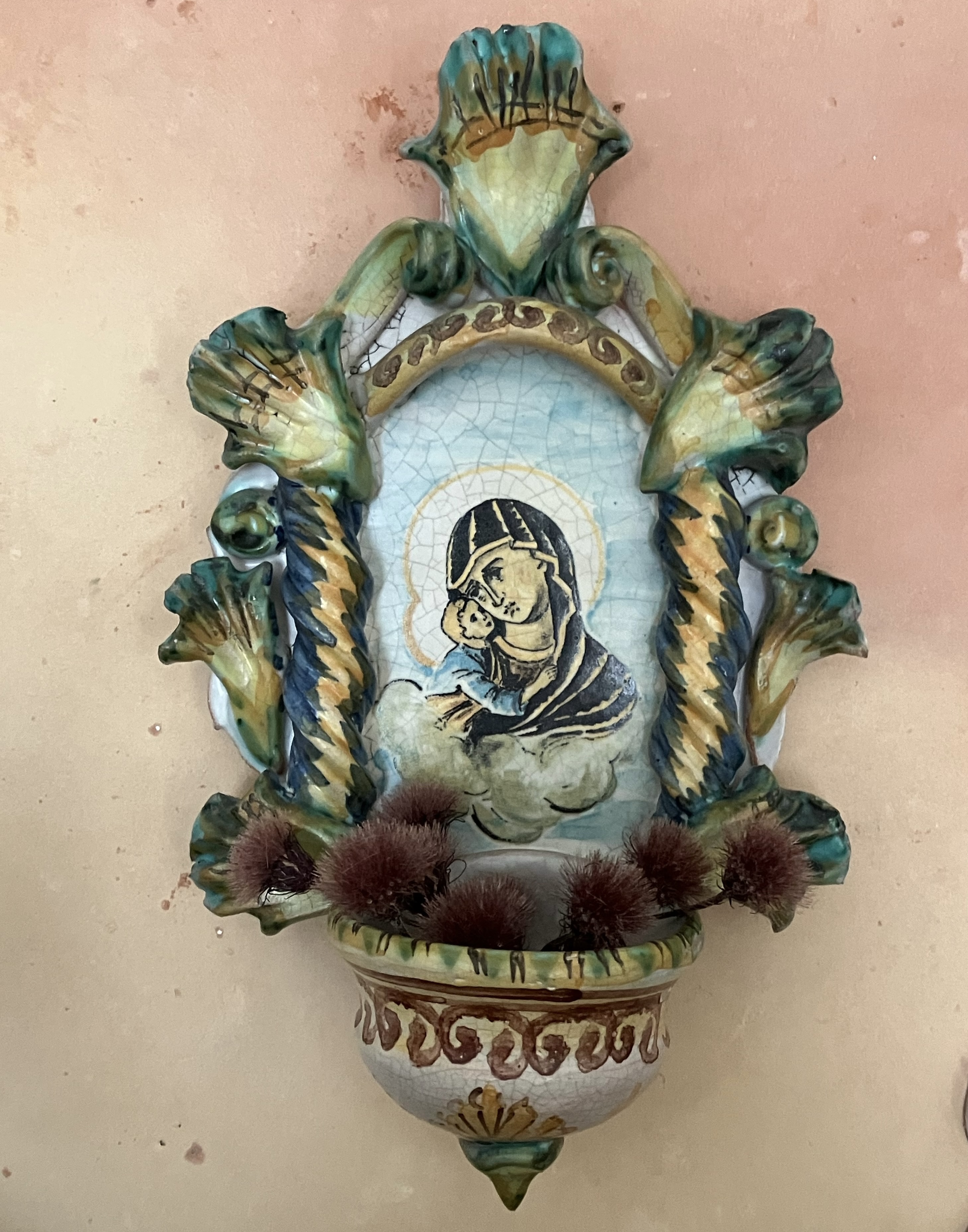
If I reached for ceci beans, my hand would have passed right over a pile of coarse earthenware so completely ordinary as to be unremarkable. Yet there was nothing unremarkable about the seven or eight molds, hand-sized and handmade. Each was shaped differently: one like a cluster of grapes, one like a lamb, one an egg with a crucifix on top. At Easter, they would have been filled and baked, then flipped to turn out custards to consecrate the resurrection, the blood, the wine, the lamb of God. Except that my grandmother never used them. They were an heirloom, and irreplaceable.
“You are my oldest granddaughter,” she said. “Someday they’ll be yours.”
I must have been about twelve years old when I handled them for the first time. They were heavy and crude with uneven matt glaze over brown clay. The long-deceased artisan’s visible fingerprints had traveled an ocean and landed in this suburban shrine, and I touched them as if they had been fingered by a saint.
Being stacked next to canned beans did not diminish the molds’ value. Quite the opposite. I wasn’t Catholic—my maternal great-grandfather had disavowed Catholicism before emigrating—but I could imagine Sicilian paesani bringing their sheep or donkeys or goats into a village church to be blessed by a priest. In the sanctuary of The Big Closet, the molds blessed the ceci, and the ceci sanctified the molds.
 Melanie S Smith